
Cockatiel · Vegetables
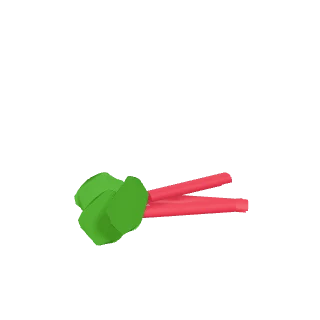
Can cockatiels eat rhubarb?
No. Rhubarb leaves contain soluble oxalates that can harm the kidneys, and rhubarb appears on avian vet toxic-plant lists. Do not feed any part of it to cockatiels.
- Sugar
- 1.1 g / 100 g
If your cockatiel already ate some
Call your avian vet or a poison line if your cockatiel ate rhubarb leaf. For a small taste of stalk, ring your vet for advice and watch for regurgitation, weakness, trembling, increased drinking or watery droppings.
Why
Risks. Soluble oxalates in rhubarb leaves can lower blood calcium and injure the kidneys. The stalks carry much less oxalate, but they have no nutritional value for cockatiels and are usually served with sugar.
Questions owners ask 1
Is it safe to grow rhubarb near an outdoor aviary?
It is best not to. Birds may reach or be offered the leaves, which are the most toxic part.
Rhubarb: nutrition per 100 g
| Water | 93.6 g |
|---|---|
| Energy | 21 kcal |
| Sugars | 1.1 g |
| Fat | 0.2 g |
| Protein | 0.9 g |
| Fibre | 1.8 g |
| Calcium | 86 mg |
| Phosphorus | 14 mg |
| Calcium : phosphorus | 6.14 : 1 |
| Sodium | 4 mg |
| Vitamin A (RAE) | 5 µg |
| Vitamin C | 8 mg |
“Rhubarb, raw”, USDA FoodData Central (SR Legacy, FDC 167758). Public domain.
Sources & method 3
The sources below discuss rhubarb for cockatiels (or for pet birds generally). Confidence: medium. Rated on the JOMIZOO Feeding Scale; when good sources disagree we choose the more cautious level.
- Unsafe Foods for Birds — LafeberVet
- Client education: Toxic plants — LafeberVet
- Rhubarb — Pet Poison Helpline
Other pets
More vegetables
 Yes
Carrot
Yes
Carrot
 Yes
Broccoli
Yes
Broccoli
 Yes
Cucumber
Yes
Cucumber
 Small amounts
Tomato
Small amounts
Tomato
 Yes
Bell pepper
Yes
Bell pepper
 Small amounts
Chili pepper
Small amounts
Chili pepper
 Small amounts
Celery
Small amounts
Celery
 Yes
Cabbage
Yes
Cabbage
 Yes
Cauliflower
Yes
Cauliflower
 Yes
Zucchini
Yes
Zucchini
 Yes
Sweet potato
Yes
Sweet potato
 Small amounts
Potato
Small amounts
Potato
 Yes
Pumpkin
Yes
Pumpkin
 Yes
Peas
Yes
Peas
 Small amounts
Corn
Small amounts
Corn
 Yes
Green beans
Yes
Green beans
 Never
Onion
Never
Onion
 Never
Garlic
Never
Garlic
 Better not
Mushroom
Better not
Mushroom