
Hamster · Vegetables
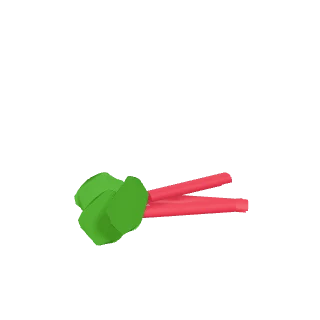
Can hamsters eat rhubarb?
No. The RSPCA warns rhubarb can be poisonous to rodents. It contains soluble oxalates, especially in the leaves, which can damage the kidneys.
- Sugar
- 1.1 g / 100 g
If your hamster already ate some
Call your vet promptly and say whether leaves or stalk were eaten and how much. Watch for drooling, trembling, weakness, reduced appetite, or changes in drinking and urination.
Why
Risks. Rhubarb, particularly the leaves, contains soluble oxalates, which bind calcium and can cause kidney failure, tremors and drooling in animals. The stalks are also very sour.
Questions owners ask 2
Are rhubarb stalks safe if the leaves are removed?
No. The leaves are the most dangerous part, but the RSPCA, Woodgreen and PetMD advise against rhubarb in general for hamsters.
What about cooked rhubarb, crumble or jam?
No. Cooking does not make rhubarb suitable, and desserts add sugar.
Rhubarb: nutrition per 100 g
| Water | 93.6 g |
|---|---|
| Energy | 21 kcal |
| Sugars | 1.1 g |
| Fat | 0.2 g |
| Protein | 0.9 g |
| Fibre | 1.8 g |
| Calcium | 86 mg |
| Phosphorus | 14 mg |
| Calcium : phosphorus | 6.14 : 1 |
| Sodium | 4 mg |
| Vitamin A (RAE) | 5 µg |
| Vitamin C | 8 mg |
“Rhubarb, raw”, USDA FoodData Central (SR Legacy, FDC 167758). Public domain.
Sources & method 5
The sources below discuss rhubarb for hamsters (or for pet rodents generally). Confidence: high. Rated on the JOMIZOO Feeding Scale; when good sources disagree we choose the more cautious level.
- What to feed hamsters — RSPCA
- What to feed your hamster - safe foods, fruit, veg and a complete feeding guide — Woodgreen Pets Charity
- Dwarf Hamster Care Sheet — PetMD (written by Maria Zayas, DVM; reviewed by Melissa Witherell, DVM)
- Syrian Hamster Care Sheet — PetMD (written by Maria Zayas, DVM)
- Rhubarb (toxic and non-toxic plants list) — ASPCA Animal Poison Control Center
Other pets
More vegetables
 Small amounts
Carrot
Small amounts
Carrot
 Yes
Broccoli
Yes
Broccoli
 Yes
Cucumber
Yes
Cucumber
 Better not
Tomato
Better not
Tomato
 Yes
Bell pepper
Yes
Bell pepper
 Better not
Chili pepper
Better not
Chili pepper
 Better not
Celery
Better not
Celery
 Yes
Cabbage
Yes
Cabbage
 Yes
Cauliflower
Yes
Cauliflower
 Yes
Zucchini
Yes
Zucchini
 Small amounts
Sweet potato
Small amounts
Sweet potato
 Never
Potato
Never
Potato
 Yes
Pumpkin
Yes
Pumpkin
 Small amounts
Peas
Small amounts
Peas
 Small amounts
Corn
Small amounts
Corn
 Small amounts
Green beans
Small amounts
Green beans
 Never
Onion
Never
Onion
 Never
Garlic
Never
Garlic
 Better not
Mushroom
Better not
Mushroom